
Arizona Pest Library: Identify Common Pests
Straight answers on the pests we deal with most across the Valley, what they are, whether they're dangerous, and how to keep them out.
50 desert pests
Identify what you're seeing
Correct ID changes the treatment. Tap any pest for signs, habitat, and how we keep it out.
Scorpions
3 speciesArizona Bark Scorpion
Higher riskThe Arizona bark scorpion is the most common, and the only medically significant, scorpion in the Phoenix area. It's light tan, about 2-3 inches, glows blue-green under UV light, and can climb walls and ceilings.
Identification & controlArizona Giant Hairy Scorpion
NuisanceThe giant hairy scorpion is North America's largest scorpion, up to 6 inches, named for the brown hairs on its tail and legs. Despite its size, its venom is mild; the much smaller bark scorpion is the dangerous one.
Identification & controlStriped Tail Scorpion
NuisanceThe striped tail (devil) scorpion is a stocky, tan Arizona scorpion with dark stripes down its tail segments. It's far more common in some yards than the bark scorpion but is not a climber and is much less venomous.
Identification & controlSpiders
5 speciesBlack Widow Spider
Higher riskThe western black widow is a glossy black spider with a red hourglass on the underside of its abdomen. It builds messy, strong webs in dark, low, undisturbed spots around Valley homes.
Identification & controlArizona Desert Recluse Spider
NuisanceThe desert recluse is a tan spider with a faint violin marking and six eyes in three pairs. True desert recluses live mostly in outlying desert areas and are far rarer in Phoenix yards than people fear.
Identification & controlGiant Crab Spider (Huntsman)
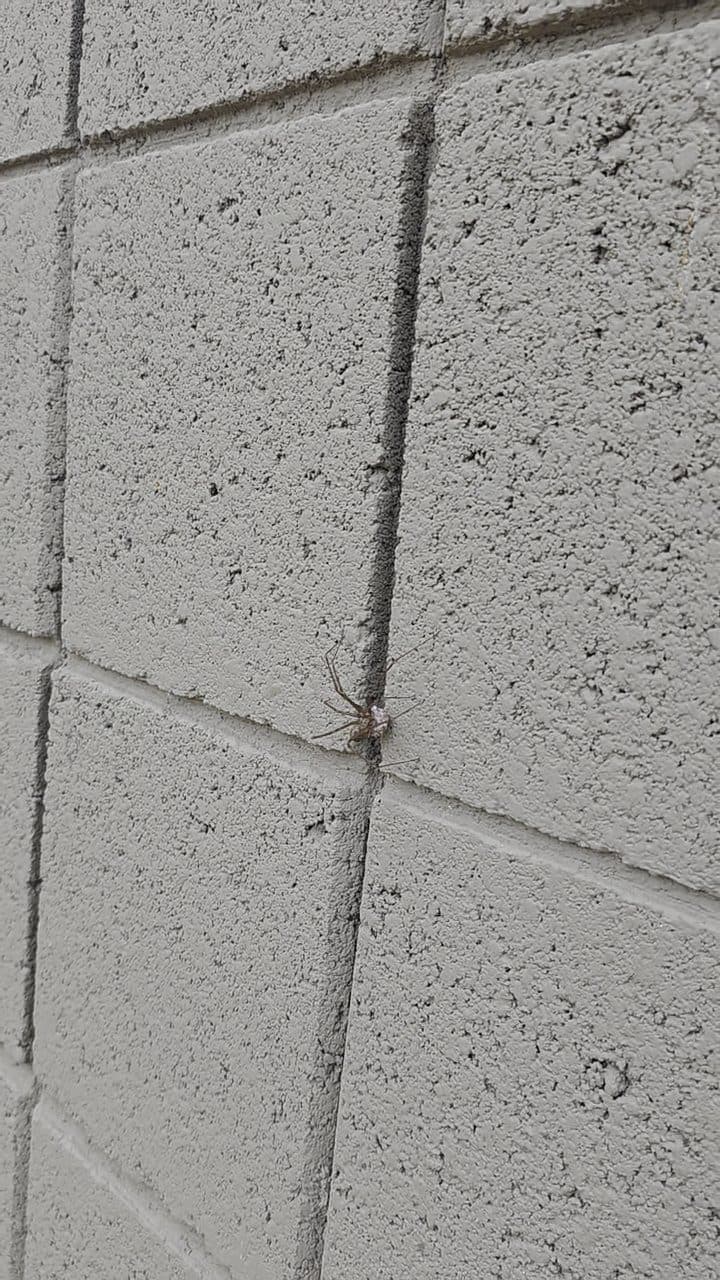
Low riskThe giant crab spider, or huntsman, is a large, flat, fast tan spider that can span several inches. It looks alarming on a wall but is a harmless hunter that actually eats other pests, including cockroaches.
Identification & controlDesert Tarantula
Low riskThe desert (Arizona blond) tarantula is a large, slow, hairy brown spider. Males wander in late summer looking for mates, which is when most people see them crossing yards and driveways.
Identification & controlArizona Sun Spider (Camel Spider)
Low riskThe sun spider (solifugae / camel spider) is a fast tan arachnid with oversized jaws. Despite wild internet myths, it's small, non-venomous, and harmless, it just runs toward your shadow, not at you.
Identification & controlAnts
5 speciesPavement Ant
Low riskThe pavement ant is a small brown-black ant that nests under sidewalks, driveways, and slabs, leaving little piles of displaced sand at cracks and expansion joints.
Identification & controlArizona Odorous House Ant
Low riskThe odorous house ant is a tiny dark ant that gives off a rotten-coconut smell when crushed. It trails indoors after water and sweets, especially in kitchens and bathrooms.
Identification & controlHarvester Ant
Higher riskThe harvester ant is a large red-brown ant that clears a bare, gravel-ringed disc around its nest. It delivers a painful sting and is common in open desert yards.
Identification & controlCrazy Ant
Low riskThe crazy ant is a small dark ant named for its fast, erratic, zig-zagging movement instead of neat trails. It forms huge numbers and is drawn to electronics and moisture.
Identification & controlSouthern Fire Ant
Higher riskThe southern fire ant is a native red-and-black stinging ant common in Valley yards. It swarms and stings when its nest is disturbed, leaving itchy welts.
Identification & controlCockroaches
3 speciesAmerican Cockroach
NuisanceThe American cockroach (palmetto bug / sewer roach) is Arizona's largest common roach, reddish-brown and up to 2 inches. It lives in sewers and drains and comes up into homes through plumbing.
Identification & controlGerman Cockroach
Higher riskThe German cockroach is a small tan roach with two dark stripes behind the head. It breeds explosively indoors and is the hardest roach to eliminate, an infestation rarely clears without treatment.
Identification & controlArizona Turkestan Cockroach
NuisanceThe Turkestan cockroach is an outdoor roach that has largely replaced the oriental roach in Arizona. Males are tan and fly to lights; females are dark with cream markings. It lives in water and irrigation boxes.
Identification & controlTermites
3 speciesSubterranean Termite
Low riskSubterranean termites are the most destructive pest in Arizona. They nest in the soil and build mud tubes to reach wood, and the Valley sits in one of the highest subterranean termite pressure zones in the country.
Identification & controlDesert Subterranean Termite
Higher riskThe desert subterranean termite is Arizona's most destructive termite. It nests in soil, builds mud tubes to reach wood, and can tunnel through walls to attack a home from below.
Identification & controlWestern Drywood Termite
Higher riskThe western drywood termite lives entirely inside dry wood with no soil contact, infesting attics, framing, and furniture. It gives itself away with piles of tiny six-sided pellets.
Identification & controlRodents and wildlife
6 speciesArizona Roof Rat
Higher riskThe roof rat is a sleek, dark, agile climber that has spread across Phoenix neighborhoods with mature citrus and irrigation. It nests high, in attics, trees, and rooflines, not in burrows.
Identification & controlNorway Rat
Higher riskThe Norway rat is a large, heavy-bodied brown rat that burrows at ground level, along foundations, under sheds, and near garbage, unlike the climbing roof rat.
Identification & controlArizona House Mouse
Higher riskThe house mouse is a small gray rodent that squeezes through gaps the size of a dime. It breeds year-round indoors and leaves droppings and gnaw marks in pantries and garages.
Identification & controlPack Rat (White-Throated Woodrat)
Higher riskThe pack rat, or white-throated woodrat, builds bulky stick-and-debris nests (middens) in desert-landscape yards and engine bays. It's notorious for chewing vehicle wiring.
Identification & controlBotta's Pocket Gopher
Low riskBotta's pocket gopher is a burrowing rodent that lives entirely underground, pushing up fan-shaped soil mounds and severing plant roots from below in lawns and gardens.
Identification & controlRound-Tailed Ground Squirrel
Low riskThe round-tailed ground squirrel is a small, pale, prairie-dog-like rodent that digs open burrows in desert yards and comes out in the heat of the day.
Identification & controlBees and wasps
5 speciesArizona Africanized Honey Bee
Higher riskAfricanized ('killer') honey bees look nearly identical to European honey bees but defend their colony far more aggressively. In Arizona, most wild honey bee colonies are Africanized.
Identification & controlCarpenter Bee
NuisanceThe carpenter bee is a large, shiny bee that bores round, dime-sized holes into wood beams and fascia to nest. The males hover and buzz aggressively but have no stinger.
Identification & controlPaper Wasp
Higher riskThe paper wasp builds the familiar open, umbrella-shaped nest of gray papery cells under eaves and patio ceilings. It's slender with long dangling legs in flight.
Identification & controlArizona Mud Dauber
Low riskThe mud dauber is a slender, often metallic-blue or black-and-yellow wasp that builds tube-shaped mud nests on walls and eaves. It's solitary and stocks its nest with paralyzed spiders.
Identification & controlTarantula Hawk Wasp
NuisanceThe tarantula hawk is a huge black wasp with bright orange wings that hunts tarantulas to feed its young. Its sting is rated among the most painful of any insect, but it's not aggressive toward people.
Identification & controlFlies, gnats and mosquitoes
5 speciesHouse Fly
NuisanceThe house fly is the common gray fly that breeds in garbage, pet waste, and decaying matter. It moves rapidly between filth and food, spreading bacteria as it goes.
Identification & controlArizona Drain Fly
Low riskThe drain fly (moth fly) is a tiny, fuzzy, moth-like fly that breeds in the gelatinous film inside slow or unused drains. Adults sit on walls near sinks and showers.
Identification & controlFungus Gnat
Low riskThe fungus gnat is a tiny dark fly that breeds in the moist soil of overwatered houseplants. Adults flit weakly around plants, windows, and screens.
Identification & controlAedes aegypti Mosquito
Higher riskThe Aedes aegypti is a small dark, white-marked mosquito that has spread across Phoenix. It bites aggressively during the day and breeds in tiny amounts of standing water.
Identification & controlArizona Culex Mosquito
Higher riskThe Culex is the Valley's common house mosquito, active at dusk and night. It's the main West Nile virus vector in Arizona and breeds in stagnant water.
Identification & controlCrickets and occasional invaders
8 speciesField Cricket
Low riskThe field cricket is the large black cricket that surges in late summer, chirping loudly and gathering around exterior lights before slipping into garages and homes.
Identification & controlArizona Indian House Cricket
Low riskThe Indian house cricket is a pale tan cricket that has become common in the Southwest. It thrives around lights and buildings and can get indoors in large numbers.
Identification & controlArizona Silverfish
Low riskThe silverfish is a teardrop-shaped, silvery, wingless insect that wriggles like a fish. It seeks humidity and feeds on paper, starches, and stored goods.
Identification & controlSpringtail
Low riskThe springtail is a minuscule insect that jumps using a tail-like spring. It swarms in damp soil, potting mix, and around overwatered areas and pools, sometimes in huge numbers.
Identification & controlDesert Millipede
Low riskThe desert millipede is a large brown, slow-moving, many-legged arthropod that surges out during the summer monsoon. It curls into a spiral when disturbed and is completely harmless.
Identification & controlArizona Giant Desert Centipede
Higher riskThe giant desert centipede is a large, fast, flattened arthropod, sometimes 6-8 inches, that hunts insects at night. Unlike millipedes, it has a venomous bite.
Identification & controlPill Bug & Sowbug
Low riskPill bugs (roly-polies) and sowbugs are small gray crustaceans that live in damp soil and mulch. Pill bugs roll into a ball; sowbugs can't. Both are harmless moisture-lovers.
Identification & controlRing-Legged Earwig
Low riskThe ring-legged earwig is a slender dark earwig with banded legs and pincers at the rear. It's common in Valley yards and slips indoors seeking moisture, but the pincers are mostly for show.
Identification & controlBeetles and pantry pests
4 speciesPalo Verde Root Borer Beetle
Low riskThe palo verde root borer is one of Arizona's largest beetles, a 3-inch black beetle that clumsily buzzes around at dusk in summer monsoon season. Its grubs feed on tree roots underground.
Identification & controlArizona Blister Beetle
Higher riskThe blister beetle is a slender, often brightly marked beetle that releases a chemical (cantharidin) which raises painful blisters on skin if the beetle is crushed against you.
Identification & controlCarpet Beetle
Low riskThe carpet beetle is a tiny rounded beetle whose larvae feed on wool, silk, feathers, and stored fibers. The bristly larvae do the damage, chewing holes in fabrics and rugs.
Identification & controlIndian Meal Moth
Low riskThe Indian meal moth is the most common pantry moth, its larvae infest flour, grains, cereal, dried fruit, and pet food, leaving silk webbing in the package.
Identification & controlTicks, fleas and biting pests
3 speciesBrown Dog Tick
Higher riskThe brown dog tick is the tick that infests Arizona homes and yards with dogs. Unlike most ticks it can complete its whole life cycle indoors, so infestations can explode.
Identification & controlArizona Cat Flea
Higher riskThe cat flea is the flea that bites both cats and dogs (and people) in Arizona. It jumps aboard pets, then drops eggs into carpet, bedding, and yard soil where larvae develop.
Identification & controlConenose (Kissing Bug)
Higher riskThe conenose, or kissing bug, is a dark cone-headed insect that comes out at night in late spring to feed on blood, often biting around the face, hence the name. In Arizona it's tied to packrat nests.
Identification & controlBuilt for the Sonoran, not a generic climate
Heat drives pests toward your home's cool and moisture; monsoons flood their harborage; and block-and-stucco construction leaves entry points national advice never accounts for.
- Heat migration
- Pests move indoors chasing cooler, moist air through the hottest months.
- Monsoon push
- Storms flood harborage and force scorpions, crickets, and roaches inside.
- Construction gaps
- Weep screens, thresholds, and block walls are open doors without sealing.
- ID-first treatment
- A bark scorpion and a hairy scorpion need different plans, so we inspect first.
Ready to get the pests out, and keep them out?
Recurring plans start at $49/month with a free re-service guarantee between visits.